
-(1).png)
Your doctor has written NCCT KUB on the prescription. You searched what it means and landed here. Good — this page answers everything: what the abbreviation stands for, what the scan actually does, why no fasting or injection is needed, how much it costs in Delhi NCR, and what to do if your report shows hydronephrosis.
Book NCCT KUB at NABL-accredited diagnostic centres across Delhi NCR — WhatsApp +91-9990032078
NCCT KUB Cost in Delhi 2026
| Scan Type | Standalone Lab | Private Hospital | CGHS Rate (NABH) |
|---|---|---|---|
| NCCT KUB | ₹1,500 – ₹4,500 | ₹4,000 – ₹8,000 | ₹2,000 |
| CT KUB with contrast (CT urogram) | ₹3,000 – ₹6,000 | ₹6,000 – ₹12,000 | ₹3,000 |
| NCCT KUB + Ultrasound KUB combined | ₹2,000 – ₹6,000 | ₹6,000 – ₹12,000 | — |
Same-day appointments available across Delhi, Noida and Gurgaon. For complete CT pricing across all scan types see our CT scan cost in Delhi 2026 guide.
NCCT KUB Full Form — What Does It Mean?
NCCT KUB stands for Non-Contrast CT Scan of Kidneys Ureters and Bladder.
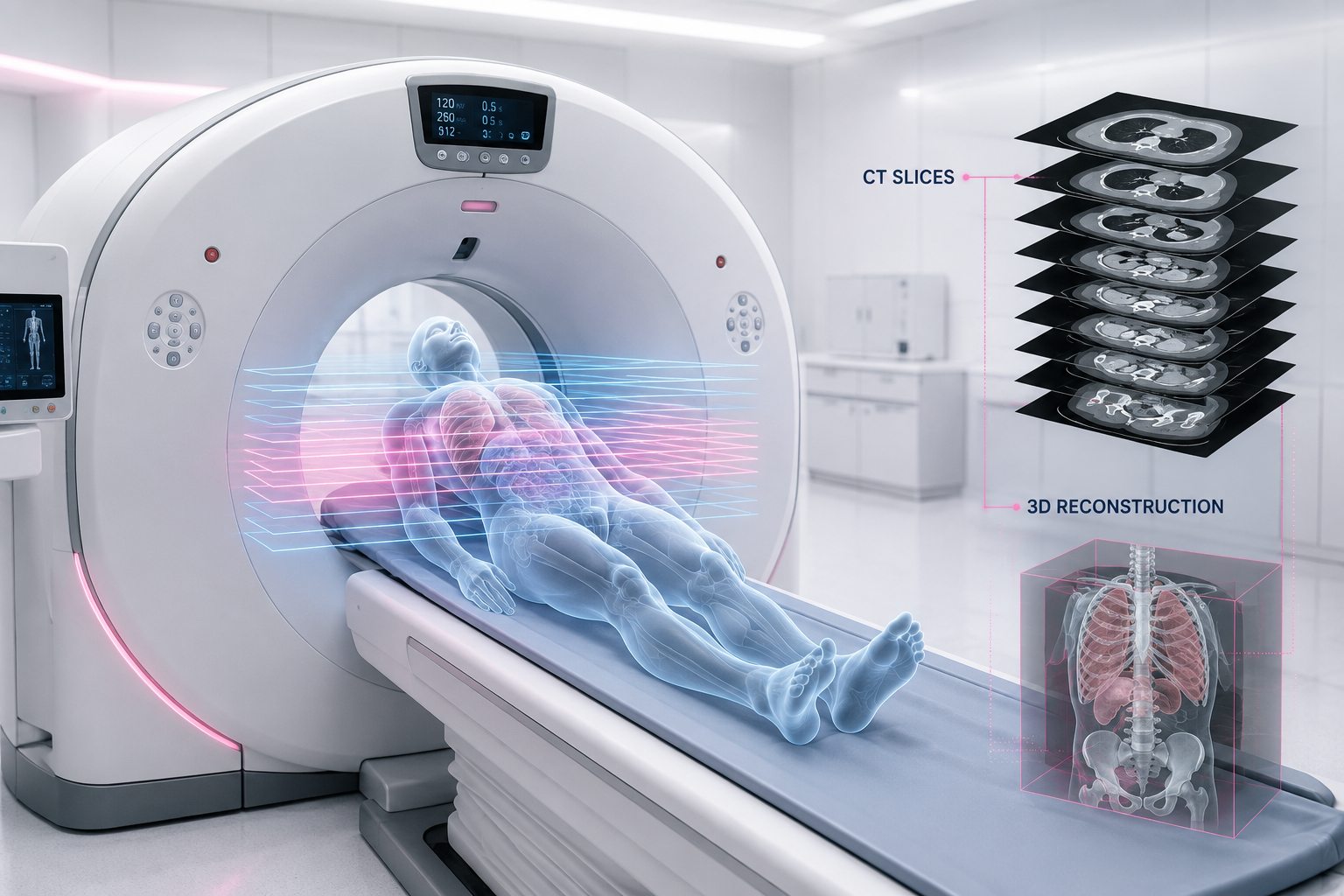
Breaking this down matters because each part of the name tells you something clinically relevant. Non-Contrast means the scan is performed without injecting any contrast dye into your vein — which means no fasting, no kidney function test, no metformin pause, and no waiting for contrast to clear your system. CT is Computed Tomography — the scanner that uses X-rays to produce cross-sectional images. KUB is the anatomical territory covered: Kidneys, Ureters and Bladder — the complete upper and lower urinary tract from the kidneys down to the bladder outlet.
The test is sometimes written on prescriptions as CT KUB, plain CT KUB, or NCCT of KUB. All of these mean the same thing.
What NCCT KUB Is Used For
NCCT KUB was designed for one primary purpose and it does that purpose better than any other available investigation: detecting kidney stones.
When a stone forms in the kidney and moves into the ureter — the narrow tube connecting the kidney to the bladder — it causes severe colicky flank pain that radiates to the groin, nausea, and blood in the urine. This is ureteral colic. The stone causing this pain is frequently a mid-ureteral stone, and this is exactly where ultrasound fails. Ultrasound misses mid-ureteral stones in up to 40% of cases because gas in the overlying bowel obscures the mid-ureter from ultrasound waves. NCCT KUB sees through this — it detects ureteral stones anywhere in the urinary tract with 95 to 98% sensitivity and 95 to 100% specificity, making it the first-line investigation recommended by urological guidelines globally.
Beyond stone detection, NCCT KUB tells your urologist the information needed to make a treatment decision. The exact location of the stone — upper, mid or lower ureter — determines whether watchful waiting with fluids and pain relief is appropriate or whether the patient needs ureteroscopy or PCNL. The stone size in millimetres determines the probability of spontaneous passage: below 4mm approximately 80% of stones pass on their own, 4 to 6mm approximately 60%, above 6mm the probability drops significantly and above 10mm intervention is almost always needed. The stone density measured in Hounsfield Units predicts response to shockwave lithotripsy — stones with HU above 1,000 are hard and unlikely to respond to ESWL, making ureteroscopy the preferred first-line treatment. None of this information is available from ultrasound or plain X-ray.
NCCT KUB is also used outside the acute stone context. It is appropriate for follow-up after conservative management to confirm stone passage, for pre-surgical planning before percutaneous nephrolithotomy, and for investigating recurrent urinary tract infections where an underlying stone may be the source.
Why No Contrast is Needed
This is the question almost every patient asks, and the answer is straightforward.
Kidney stones are naturally dense. They contain calcium, oxalate, uric acid or other mineral compounds that appear bright white on plain CT without any enhancement. Contrast dye injected intravenously opacifies blood vessels and kidney tissue — it does not make stones more visible and can actually obscure a stone by surrounding it with enhancing tissue of similar density. NCCT is therefore not just adequate for kidney stone detection — it is specifically superior to contrast CT for this indication.
The practical consequence for patients is significant. A patient arriving in the emergency department at 2am with severe flank pain and suspected ureteral colic can have an NCCT KUB immediately — no six hour fast, no blood draw for creatinine, no IV line for contrast. The scan takes five minutes. The report is ready within the hour. The urologist has a precise diagnosis.
How to Prepare for NCCT KUB
No preparation is required. This deserves to be stated plainly because it is one of the most common points of confusion.
Eat and drink normally before the scan. Stay well hydrated — a full bladder and hydrated kidneys produce better image quality and help distinguish the ureter from surrounding structures. Do not fast. Do not stop any medications. Diabetic patients on metformin do not need to pause it — there is no contrast interaction. Patients on blood thinners do not need to stop them.
Before entering the scan room remove your belt, any jewellery, and clothing with metal zips. Inform the technician of any metal implants before the scan. That is all.
The total time at the centre from arrival to leaving with your report is typically 20 to 30 minutes.
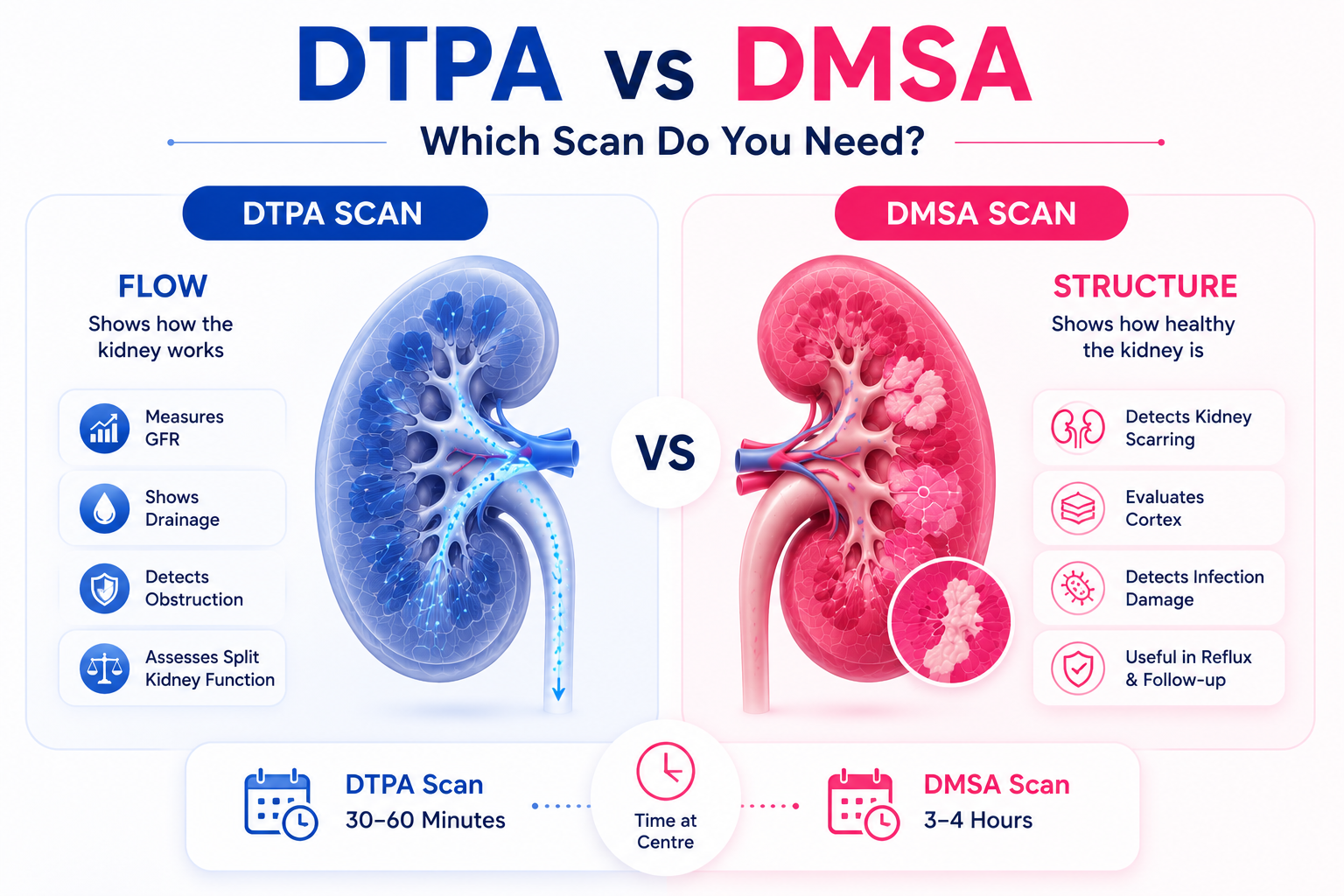
The Difference Between NCCT KUB and USG KUB with PVR
These two tests share the KUB abbreviation and are regularly confused, but they are fundamentally different investigations.
USG KUB with PVR is an ultrasound of the kidneys and bladder with measurement of post-void residual — the amount of urine remaining in the bladder after urination. It is used for prostatic enlargement assessment, neurogenic bladder, urinary retention and bladder outlet obstruction. It involves no radiation and no preparation.
If your prescription says USG KUB with PVR, you need an ultrasound — not a CT scan. The investigations answer completely different clinical questions. If you are uncertain which one your doctor intended, call the clinic and confirm before attending the centre.
NCCT KUB vs CT Urogram vs CT Abdomen
Your doctor may have written one of several CT-based kidney investigations depending on the clinical question. Understanding the differences avoids arriving at a centre with the wrong preparation or the wrong booking.
NCCT KUB is a plain CT of the urinary tract specifically for stone detection. No contrast, no fasting, no preparation. See our detailed CT scan KUB cost in Delhi guide for further detail.
CT Urogram (also written as CT IVP or contrast CT KUB) uses IV iodine contrast timed to image the collecting system filling with contrast — used for haematuria workup where a urothelial tumour needs to be excluded, complex renal anatomy, and ureteral strictures. It requires four to six hours fasting and a recent creatinine. The cost is ₹3,000 to ₹6,000 at standalone labs.
CT Abdomen and Pelvis is a broader investigation covering not just the kidneys but liver, pancreas, bowel and lymph nodes. Usually performed with contrast. See our CT scan cost in Delhi 2026 guide for full pricing.
When a renal mass is found on CT and needs further characterisation, or when the kidneys need assessment without radiation, MRI is preferred. See our MRI kidney scan guide for when MRI is the more appropriate investigation.
Reading Your NCCT KUB Report
The report will use specific terminology. Here is what the key terms mean in plain language.
Calculus or calculi is the medical term for stone or stones. A right lower ureteric calculus is a stone in the lower part of the ureter on the right side.
Hounsfield Units (HU) measure the density of the stone. Low HU (below 500) indicates a soft stone likely to fragment with shockwave lithotripsy. High HU (above 1,000) indicates a hard stone for which ureteroscopy is the preferred first treatment.
Hydronephrosis means the kidney is swollen from urine backing up behind a blocked ureter. Mild hydronephrosis with a small stone often resolves with conservative management. Moderate to severe hydronephrosis from an obstructing stone requires prompt urological assessment — contact your urologist the same day, not at your next scheduled appointment. Severe untreated obstruction causes progressive and potentially irreversible kidney damage.
Hydroureter means the ureter itself is dilated from the obstruction — it confirms the stone is causing a significant blockage rather than just sitting passively in the ureter.
Radiation from NCCT KUB
NCCT KUB delivers approximately 3 to 5 mSv of radiation. This is equivalent to roughly one to two years of natural background radiation exposure. For an adult patient with suspected ureteral colic where the diagnosis needs to be confirmed and managed, this radiation dose is clinically appropriate and accepted by all relevant guidelines.
The scan is avoided in pregnancy. Ultrasound is used as the first-line investigation in pregnant patients with flank pain, with MR urography as the follow-up investigation when the ultrasound is inconclusive. Inform the technician if you are or may be pregnant before any scan.
In paediatric patients, low-dose CT protocols significantly reduce radiation while maintaining diagnostic accuracy for stone detection.
Related Guides
For CT scan pricing across all scan types see our CT scan cost in Delhi 2026 guide. For CT scan pricing specifically in Noida see our CT scan cost in Noida guide. For kidney function assessment using nuclear medicine see our DTPA renal scan cost in Delhi guide. For renal mass characterisation see our MRI kidney scan guide.
Book NCCT KUB in Delhi NCR
EVE Healthcare partner NABL-accredited diagnostic centres offer NCCT KUB across Delhi NCR from ₹1,500 with same-day availability and reports within one to two hours.
Book online at eve-healthcare.com or WhatsApp +91-9990032078 for same-day appointments across South Delhi, Noida, Gurgaon and Ghaziabad.
-(1).png)
-(1)-(1).png)
-(1)-(1).png)