Most people find out they need an EEG and immediately panic — hospital queues, confusing paperwork, half a day gone. But over the past couple of years, that whole experience has quietly changed. At-home and doorstep diagnostic services have made brain-wave testing surprisingly painless. Here's what the EEG experience actually looks like when you book through EVE Healthcare, and why it might be a better option than you think.
What Exactly Is an EEG — and Why Would You Need One?
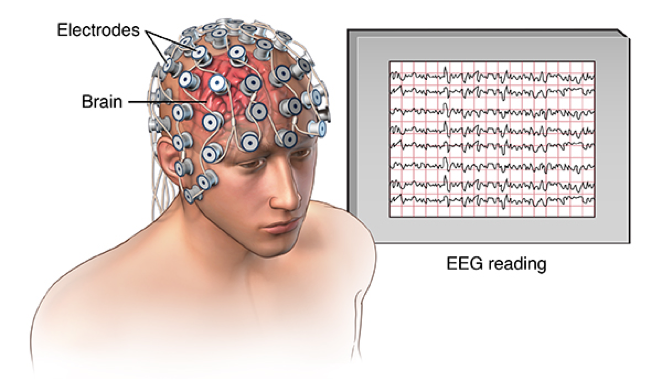
An electroencephalogram, or EEG, records the electrical activity happening in your brain at any given moment. Small metal electrodes are placed on the scalp — they pick up the tiny electrical signals that brain cells fire when they communicate with each other. The whole thing shows up as a graph of wavy lines, and a neurologist reads those patterns to figure out what's going on.
It sounds complex, but the test itself is painless. No needles, no radiation, nothing invasive. You just sit (or lie) still for however long the test runs, and the machine does the work.
Most common use
Epilepsy & Seizures
An EEG is often the first test ordered when a doctor suspects seizures or epilepsy. It can detect abnormal electrical patterns even between episodes.
Also used for
Sleep & Brain Disorders
Sleep disorders, encephalopathy, brain tumours, strokes, and monitoring patients in intensive care all rely on EEG for diagnosis or ongoing tracking.
Your doctor might recommend an EEG if you've experienced unexplained blackouts, recurring headaches with no clear cause, memory lapses, sudden confusion, or any event that looked or felt like a seizure. It's also used to confirm brain death in patients in a coma, and to monitor treatment response in epilepsy patients already on medication.
70M+
People worldwide living with epilepsy, with India contributing a significant share
₹1,400
Typical starting price for a routine EEG test in Delhi at NABL-accredited centres
72h
Typical turnaround for EEG reports once recording is complete
12h
Duration of extended monitoring for complex epilepsy cases requiring full seizure capture
The Different Types of EEG — Which One Do You Actually Need?
Not all EEGs are the same. The type your doctor recommends depends on what they're trying to catch and how urgently they need to see it.
Routine EEG (20–40 minutes)
This is the standard test — the one most people get. You sit in a chair, electrodes are attached to your scalp with a paste that washes out easily, and the technician records your brain activity for about half an hour. Sometimes they'll ask you to breathe deeply or will flash a light in front of you to see how your brain responds. Simple, quick, done.
Sleep-Deprived EEG
Some abnormal brain activity only shows up when you're tired or falling asleep. For a sleep-deprived EEG, you'll be asked to stay up most of the night before the test. The idea is that the recording captures patterns that a rested brain might suppress. It's not comfortable, but it's clinically useful when a routine EEG comes back normal despite ongoing symptoms.
Ambulatory EEG (24-hour monitoring)
With an ambulatory EEG, a portable recorder is fitted and you go home wearing it — continuing your normal day. This type is particularly valuable because it captures brain activity during real-life situations: your commute, a stressful call, watching TV, trying to fall asleep. A full day of data is far more revealing than a 30-minute snapshot in a clinic.
Extended Monitoring (12-hour or longer)
For complex or hard-to-diagnose cases — refractory epilepsy, pre-surgical evaluation, non-epileptic psychogenic events — doctors may need 12 hours or more of continuous recording with simultaneous video. This usually requires admission to a specialised monitoring unit.
"The extended 12-hour EEG changed everything for our family. After years of trying to catch my mother's episodes on a 30-minute test, the overnight recording finally showed exactly what was happening."
How EVE Healthcare Makes Booking an EEG Effortless
EVE Healthcare is a diagnostic marketplace — meaning it doesn't run labs itself, but connects patients to a network of NABL-accredited diagnostic centres across Delhi, Noida, and Gurugram. Think of it as a search engine specifically for diagnostics, except someone on the other end handles the actual booking for you.
The premise is simple: instead of calling five different labs to ask about prices and availability, you send one WhatsApp message. EVE finds the best-priced centre closest to you, checks availability, and books it. That's genuinely it.
How the Booking Process Works
-
WhatsApp or Call— Reach EVE Healthcare instantly at+918065428618or via WhatsApp at+917224891968. Tell them you need an EEG and mention your city or area.
-
EVE Finds Your Centre — The team searches for NABL-accredited centres near you and matches you to the best price currently available — often with significant discounts compared to walk-in rates.
-
Appointment Confirmed — You get the centre details, time, and address. No forms, no referral loops, no sitting on hold.
-
Show Up and Get Tested — The centre handles the actual test. You may receive your report digitally within 48–72 hours.
Coverage area: EVE Healthcare currently connects patients across New Delhi, Noida, and Gurugram. You can also use the website's location search to find the nearest available diagnostic centre in real time.
Preparing for Your EEG — the Things That Actually Matter
Preparation for an EEG is straightforward, but skipping these steps can genuinely affect the quality of your results. Here's what to do (and not do) the night before and morning of the test.
The night before
- Wash your hair thoroughly with shampoo — no conditioner, no oil, no styling products. The electrodes need clean, dry scalp contact to pick up accurate signals.
- Avoid caffeine — no tea, coffee, or energy drinks for at least 8 hours before the test.
- If you've been told to have a sleep-deprived EEG, follow your doctor's specific instructions about how much sleep to skip.
- Take your regular medications as usual unless your neurologist has explicitly told you to stop. Never skip seizure medication without medical guidance.
On the day
- Eat a normal meal beforehand — low blood sugar can affect brain activity.
- Wear loose, comfortable clothing without metallic accessories.
- Let the technician know about any medications, supplements, or medical devices you use.
- Arrive relaxed — anxiety won't ruin the test, but resting quietly makes it easier for the technician to get clean recordings.
What Happens During the Test
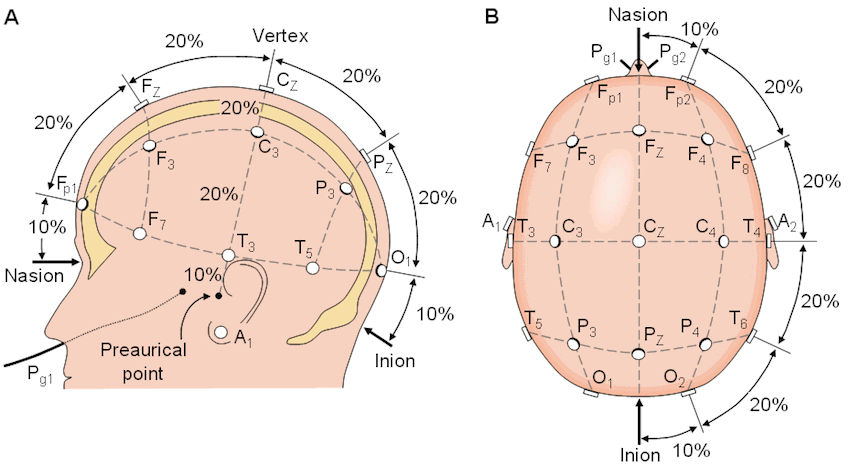
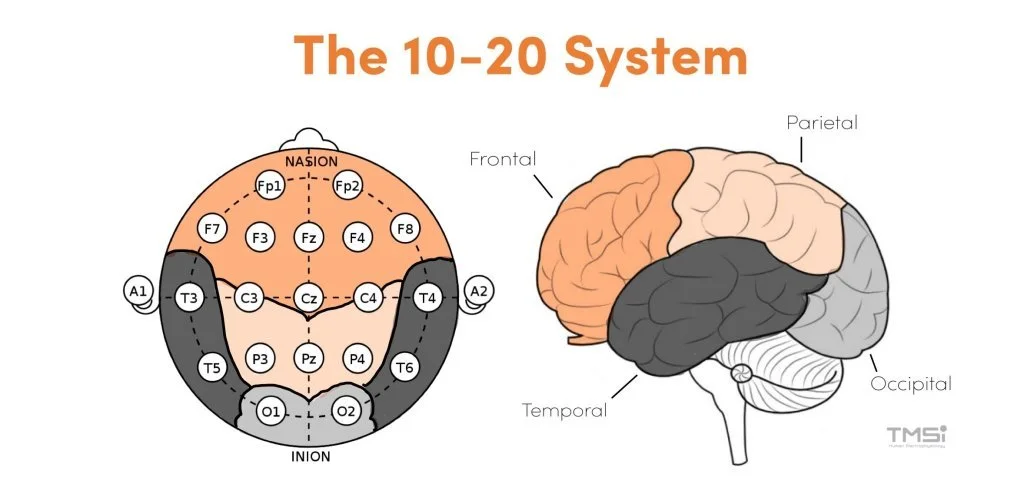
Once you're settled in, a trained technician attaches around 20–25 small electrodes to specific points on your scalp using a paste or gel. The paste is slightly sticky — it washes out with warm water afterward — but none of this hurts.
You'll be asked to lie back or sit in a reclining chair and stay as still as possible. Movement — even swallowing or blinking — creates interference in the signal, so the technician may ask you to stay quiet and minimise movement during recording phases.
During the test, you may be asked to:
- Open and close your eyes a few times on command
- Breathe rapidly and deeply for several minutes (hyperventilation can provoke certain types of abnormal activity)
- Look at a flickering light (photic stimulation), which can trigger responses relevant to certain epilepsy types
For a standard routine EEG, the whole thing takes about 30–45 minutes. You'll feel nothing unusual during it, and there are no lingering effects — you can drive home, go to work, or do whatever you had planned.
Extended 12-Hour Monitoring — What Makes It Different
When a doctor orders a 12-hour EEG, the goal is to catch something that a 30-minute window simply can't. Seizures and abnormal episodes don't operate on a schedule. They happen when they happen, and prolonged monitoring dramatically increases the chance of recording an actual event.
Who typically needs extended monitoring: patients with complex or intractable epilepsy, those being evaluated before epilepsy surgery, individuals whose symptoms include events that look like seizures but haven't been classified yet, and people with sleep-related neurological symptoms.
Extended monitoring typically requires admission to a specialised unit. Electrodes stay in place throughout, and a video recording often runs alongside the EEG — so if an event happens, both the patient's physical behaviour and the corresponding brain activity are captured simultaneously. The result is significantly more diagnostic information than any routine test can offer.
Reports from a 12-hour study take slightly longer — typically 48 to 72 hours — because a neurophysiologist reviews a large volume of data and annotates all significant findings before producing a final report.
What Your EEG Results Mean
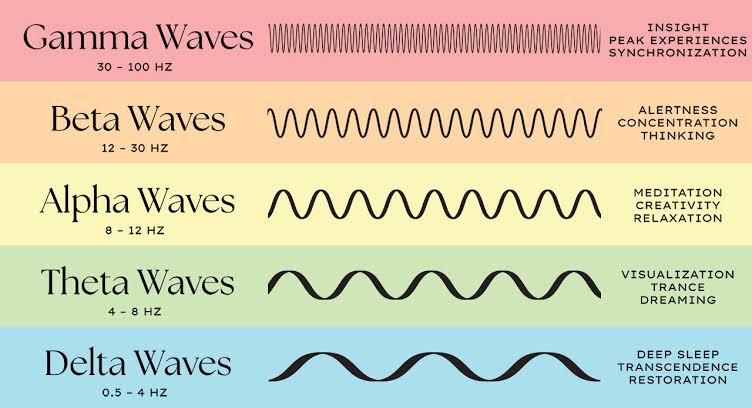
EEG results are interpreted by a neurologist or neurophysiologist. The report will describe the baseline brain activity and flag any abnormal patterns — irregular spikes, slow waves, or unusual synchronised activity that could point toward specific diagnoses.
It's worth knowing that a normal EEG doesn't always rule out epilepsy. Some people with epilepsy have normal results between episodes, which is part of why extended or sleep-deprived recordings exist. Equally, slightly unusual patterns on an EEG don't automatically mean something is wrong — interpretation always happens in context with clinical symptoms and history.
Your neurologist will discuss the results with you in detail. If you've booked through EVE Healthcare, the diagnostic centre sends your report digitally, and you can share it directly with your treating doctor.